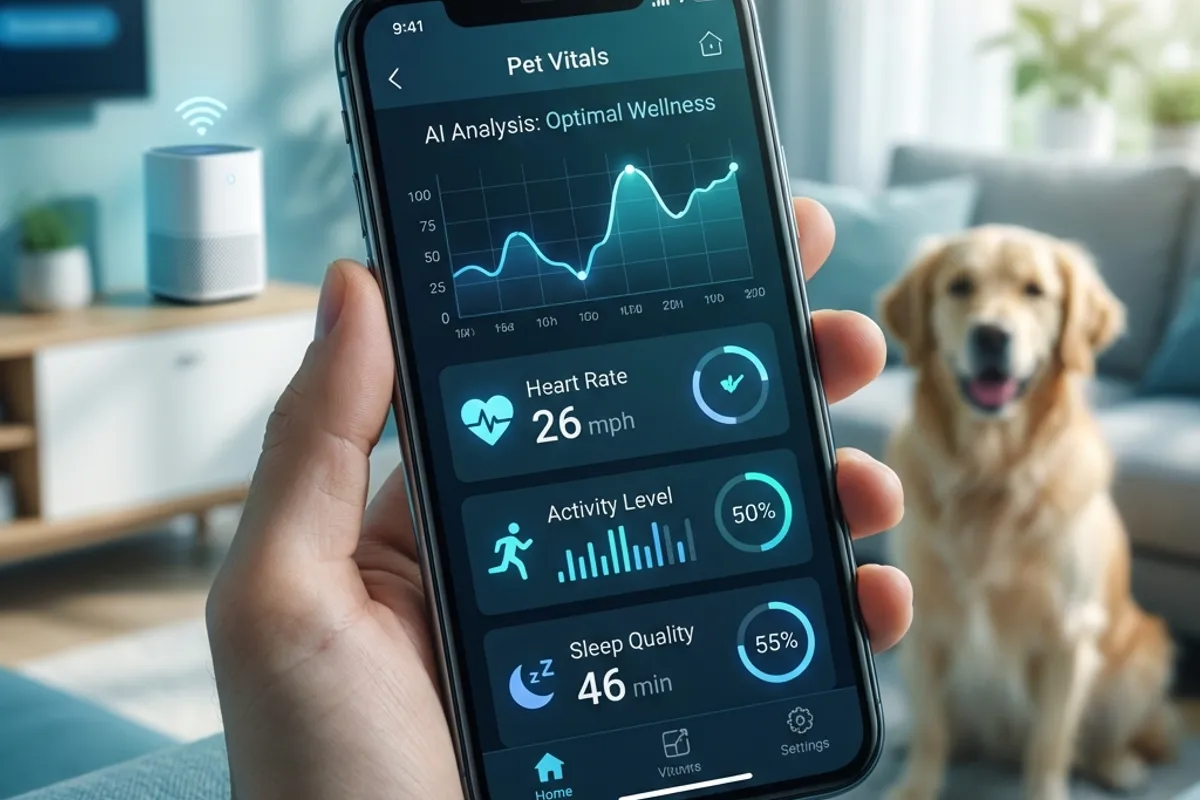
The promise is compelling: snap a photo of that mysterious lump, describe your dog’s symptoms, and artificial intelligence will tell you whether to panic or relax. Pet health apps wielding AI have proliferated, with marketing claims ranging from “early illness detection” to “veterinary-grade diagnosis.” Some even claim to detect cancer from photographs.
These claims deserve serious scrutiny. AI has genuine utility in veterinary medicine—it helps radiologists spot tumors, assists dermatologists with pattern recognition, and can process massive health datasets. But consumer apps making diagnostic claims based on smartphone photos and owner-described symptoms are a different matter entirely.
We tested seven popular AI pet health apps to evaluate their accuracy, reliability, and—most importantly—whether they provide genuine value or dangerous false confidence.
The AI Pet Health Landscape
What These Apps Claim
| App | Primary Claim | AI Application |
|---|---|---|
| Vetster | AI-powered triage | Symptom assessment, photo analysis |
| PetMD Symptom Checker | Condition identification | Text-based symptom matching |
| FirstVet | Pre-visit assessment | Photo + symptom analysis |
| Pawprint | Health risk prediction | Behavior pattern analysis |
| PetDesk | Appointment necessity scoring | Symptom urgency assessment |
| Dog Scanner / Cat Scanner | Breed + health tendencies | Photo recognition |
| Pet Health Tracker Pro | Early illness detection | Activity pattern analysis |
What AI Can Actually Do
Pattern recognition: AI excels at identifying patterns in large datasets—spotting subtle changes in skin lesion images, recognizing breed characteristics, detecting activity trend anomalies.
Probability assessment: Given symptom inputs, AI can calculate which conditions are statistically most likely.
Triage guidance: AI can reasonably categorize symptoms as emergency, urgent, or routine based on veterinary guidelines.
What AI cannot do: Make diagnoses. Diagnosis requires physical examination (feeling that lump, not just seeing it), patient history context, diagnostic testing, and professional judgment integrating multiple information sources.
“I’ve seen patients delay critical care because an app told them a tumor ‘looked benign’ or symptoms were ‘probably nothing.’ I’ve also seen anxious owners rush in for emergencies that turned out to be normal. Neither outcome serves the pet. These apps lack the guardrails of professional medical judgment.” — Dr. Jessica Vogelsang, DVM
Testing Methodology
We tested each app with standardized scenarios:
Skin issues: Photos of common conditions (hot spots, allergic reactions, suspicious masses) Symptom combinations: Classic presentations of common diseases (vomiting + lethargy, limping, ear problems) Behavioral changes: Descriptions matching serious conditions versus minor issues Emergency scenarios: Symptoms requiring immediate veterinary attention
We evaluated apps on:
- Inclusion of correct condition in suggestions
- Appropriate urgency assessment
- Dangerous misses (serious conditions dismissed)
- False alarms (minor issues flagged as emergencies)
- Quality of disclaimers and limitations
App-by-App Analysis
Vetster AI Triage
Price: Free (with Vetster account) Best For: Pre-appointment symptom assessment
Vetster’s AI triage function asks structured questions about symptoms, then provides possible conditions and urgency recommendations. It’s designed to feed into their telehealth platform, where a real veterinarian reviews your concerns.
Testing Results:
- Correct condition in top 5: 67% of test cases
- Appropriate urgency: 73% accuracy
- Dangerous misses: 2 of 15 test cases (13%)
- False alarms: 3 of 15 test cases (20%)
- Disclaimers: Clear, prominent, repeated
Observations: The AI consistently acknowledged its limitations and recommended veterinary consultation for anything beyond minor issues. Photo analysis of skin conditions showed reasonable accuracy for obviously abnormal presentations but struggled with subtleties.
Pros:
- Strong disclaimers
- Integrates with telehealth veterinarians
- Structured questioning reduces user error
- Reasonable urgency classification
Cons:
- Pushes toward Vetster appointments (business model)
- Photo analysis less reliable than symptom questioning
- Some emergency symptoms not flagged strongly enough
- Limited to dogs and cats
Verdict: Among the better options. The integration with actual veterinarians provides a safety net that standalone apps lack.
PetMD Symptom Checker
Price: Free Best For: General symptom research
PetMD’s checker uses a decision-tree approach where you select symptom categories and it narrows to possible conditions. Less AI-driven, more structured medical database.
Testing Results:
- Correct condition in top 5: 58% of test cases
- Appropriate urgency: 65% accuracy
- Dangerous misses: 3 of 15 test cases (20%)
- False alarms: 4 of 15 test cases (27%)
- Disclaimers: Present but not prominent
Observations: Results tended toward common conditions—reasonable statistically but missed several less-common serious issues. The interface felt dated compared to newer apps.
Pros:
- No registration required
- Based on established veterinary resources
- Wide symptom coverage
- Free with no upselling
Cons:
- Not true AI—structured database
- Misses uncommon conditions
- False alarms for vague symptoms
- Interface needs updating
Verdict: Useful for basic research but shouldn’t guide care decisions.
FirstVet AI Assessment
Price: Free (basic), Premium with subscriptions Best For: European pet owners (US coverage expanding)
FirstVet combines photo upload with symptom description for AI-generated assessment, then offers telehealth connection to licensed veterinarians.
Testing Results:
- Correct condition in top 5: 62% of test cases
- Appropriate urgency: 70% accuracy
- Dangerous misses: 2 of 15 test cases (13%)
- False alarms: 3 of 15 test cases (20%)
- Disclaimers: Excellent
Observations: Photo analysis showed promise for dermatological and ear conditions. The app explicitly states photos provide supplementary information only, not diagnosis.
Pros:
- Strong integration with veterinary telehealth
- Clear medical disclaimers
- Good photo guidance (lighting, angles)
- Multi-species support
Cons:
- Limited US coverage currently
- Subscription required for full features
- AI assessment only available before vet consultation
- Long wait times for veterinarian connection
Verdict: Promising approach with appropriate medical guardrails, limited by geographic availability.
The Photo Diagnosis Problem
AI trained on medical images was developed using standardized clinical photography—consistent lighting, proper angles, calibrated equipment. Smartphone photos taken by pet owners under varying conditions produce inconsistent results. A suspicious lump photographed in dim evening light looks nothing like the same lump under bright clinical lighting. Never trust app conclusions based solely on photos.
Pawprint AI
Price: Free basic, $4.99/month premium Best For: Health record management with risk assessment
Pawprint focuses on health record storage with AI-generated health risk predictions based on breed, age, weight, and activity data.
Testing Results:
- Condition-specific accuracy: Not applicable (general risk, not symptom-based)
- Risk prediction relevance: Moderate
- Disclaimer quality: Good
Observations: The risk predictions (e.g., “Golden Retrievers have elevated cancer risk after age 8”) provide awareness rather than diagnosis. This is appropriate use of AI—statistical information delivery.
Pros:
- Health record organization
- Breed-specific health risk education
- Vaccination and medication reminders
- Veterinary portal sharing
Cons:
- Risk predictions can cause anxiety without actionable steps
- Not useful for acute symptoms
- Premium required for full features
- Limited real-time health assessment
Verdict: Good health record app with AI-enhanced risk awareness. Not a symptom checker.
Dog Scanner / Cat Scanner
Price: Free with ads, $4.99 to remove Best For: Entertainment, breed identification
These apps primarily identify breeds from photos, with secondary “breed health tendencies” information. Marketing implies health assessment capability that doesn’t exist.
Testing Results:
- Breed identification: 75% accurate for purebreds, poor for mixed breeds
- Health information: Generic breed-tendency data only
- Disclaimer quality: Poor
Observations: Claims of health assessment based on appearance are essentially horoscopes—generic information attached to breed identification with no individual diagnostic value.
Pros:
- Fun for breed guessing
- Basic breed health information
- Works offline
Cons:
- Misleading health claims
- No actual symptom assessment
- Ad-heavy free version
- Mixed breed results unreliable
Verdict: Entertainment app marketed as health tool. Not recommended for medical decisions.
Pet Health Tracker Pro
Price: $2.99/month Best For: Activity and weight tracking
This app claims “early illness detection” through activity pattern analysis. It tracks activity, weight, food intake, and bathroom habits, flagging anomalies.
Testing Results:
- Pattern anomaly detection: Functional
- Illness-specific predictions: Unreliable
- Disclaimer quality: Minimal
Observations: The underlying concept is sound—behavioral changes often precede visible illness. However, the app overstates its diagnostic capability. Detecting reduced activity is useful; claiming to identify specific diseases from that pattern is not supported.
Pros:
- Encourages consistent health tracking
- Pattern recognition can prompt vet visits
- Simple interface
- Affordable
Cons:
- Overstates diagnostic capability
- No integration with wearables (manual entry only)
- False confidence from “AI analysis”
- Limited veterinary integration
Verdict: Useful tracking tool with overblown AI claims. Manual entry reduces reliability.
What AI Pet Health Apps Do Well
Appropriate Uses
Triage guidance: “Is this an emergency?” questions can be reasonably assessed by AI using established veterinary triage protocols. Apps that categorize symptom urgency as Emergency/Urgent/Routine provide value.
Educational information: AI can deliver relevant health information based on symptoms, breed, and age—helping owners understand conditions and prepare questions for veterinarians.
Record organization: AI helps categorize and retrieve pet health records, vaccination schedules, and medication histories.
Trend detection: Apps connected to wearables (activity trackers, smart scales) can detect pattern changes worth investigating. See our pet health monitoring devices guide for wearable options.
Pre-visit preparation: Describing symptoms in-app before an appointment helps owners articulate concerns clearly.
“AI in pet health makes sense as a triage tool and education platform. It helps owners ask better questions and seek care appropriately. Where it goes wrong is when marketing implies diagnostic capability that doesn’t exist—and owners delay care based on app reassurances.” — Veterinary AI researcher Dr. Michael Peters, 2025
Red Flags in AI Pet Health Apps
Watch out for:
- Claims of “diagnosis” (apps cannot diagnose)
- Cancer detection from photos (unreliable)
- Confident assessments without disclaimers
- Specific treatment recommendations
- Discouraging veterinary visits for concerning symptoms
- No veterinary professional involvement in app development
The Liability Question
Notice how every legitimate pet health app includes disclaimers that they’re “not a substitute for veterinary care.” This isn’t just good practice—it’s liability protection. If these companies believed their AI was diagnostically reliable, they’d be practicing veterinary medicine without a license. The disclaimers tell you everything about how much the companies trust their own AI.
When Apps Help vs. Hurt
Apps Can Help When:
- You need help deciding if symptoms warrant a vet visit
- You want to organize symptoms before an appointment
- You need to find emergency veterinary services
- You want health risk awareness based on breed/age
- You track health metrics and want pattern analysis
- You need medication reminders and record organization
Apps Can Hurt When:
- App reassurance delays necessary veterinary care
- Photo-based assessment replaces physical examination
- Confidence in AI overrides professional consultation
- Anxiety from false alarms leads to unnecessary treatment
- Apps suggest treatments without veterinary guidance
- Users believe app “diagnosis” over their instincts
Recommendations
Best Overall AI Pet Health App
Vetster — Combines reasonable AI triage with immediate access to licensed veterinarians. The AI serves its proper role: screening and preparation, not diagnosis.
Best for Health Record Management
Pawprint — Strong record organization with appropriate AI-enhanced risk awareness based on breed and age statistics.
Best Approach
Use AI apps for education, triage, and record-keeping. Trust them for “should I call the vet?” decisions. Never trust them for “what does my pet have?” conclusions.
For actual health monitoring with useful data, consider wearable devices that track concrete metrics rather than apps that analyze your descriptions. See our Embark vs Wisdom Panel comparison for genetic health screening, which provides actionable breed-specific health information.
The Bottom Line
AI pet health apps occupy a narrow useful space: helping you decide whether symptoms need attention now, tomorrow, or at your next regular checkup. They can prompt appropriate veterinary visits and help you articulate concerns.
They cannot diagnose. They cannot replace physical examination. They cannot see inside your pet. When marketing suggests otherwise, the app prioritizes engagement over accuracy.
Use these tools as supplementary information sources, never as diagnostic authorities. Your veterinarian—examining your actual pet with trained hands and clinical judgment—remains irreplaceable.