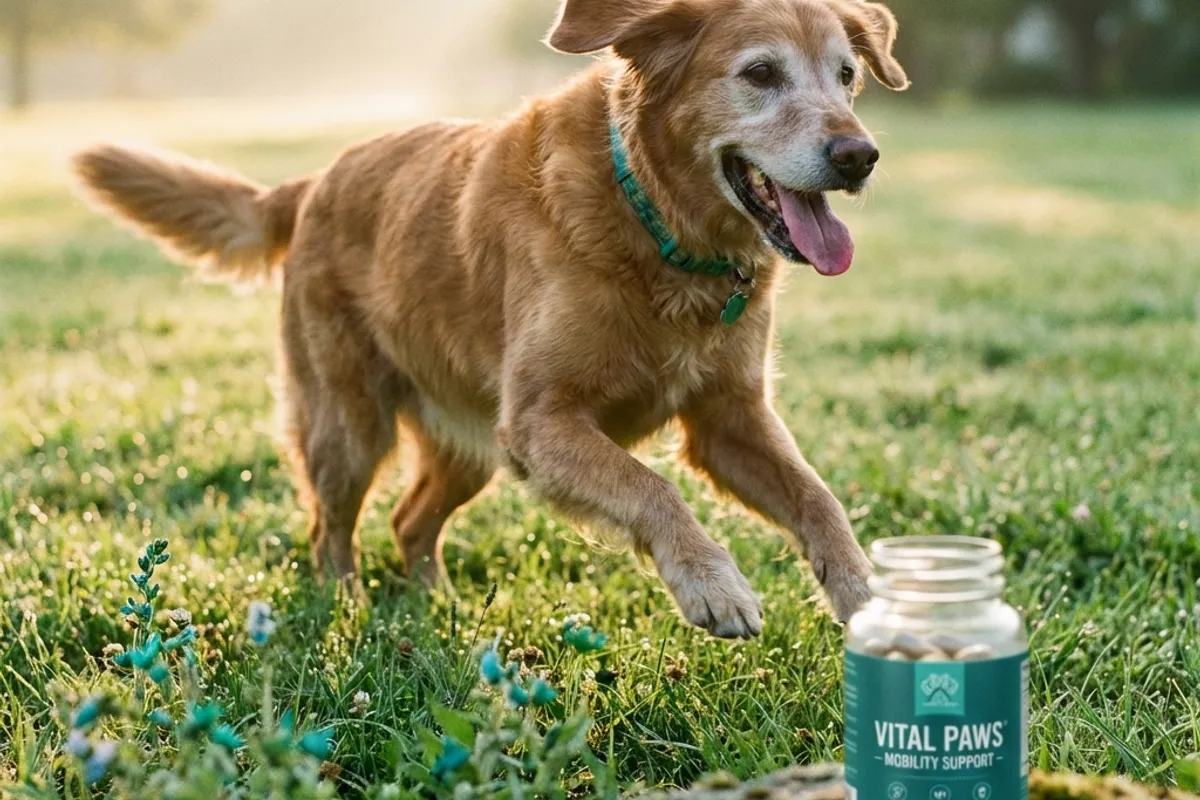
Osteoarthritis affects 65% of dogs over age 7, costing US pet owners $2.4 billion annually in management strategies. Yet clinical trials show only 4 supplement ingredients have peer-reviewed evidence for reducing joint inflammation and pain.
This analysis examines veterinary research, bioavailability testing, and comparative trials to identify which joint supplements deliver measurable outcomes versus marketing claims.
The Science of Cartilage Degradation in Dogs
Canine osteoarthritis (OA) involves progressive breakdown of articular cartilage, subchondral bone remodeling, and synovial inflammation. Unlike acute injuries, age-related OA creates a cycle of degradation faster than repair.
Key Pathological Mechanisms:
- Matrix metalloproteinases (MMPs) break down collagen at 3-5x normal rates
- Glycosaminoglycan (GAG) loss reduces cartilage shock absorption by 40-60%
- Inflammatory cytokines (IL-1, TNF-α) amplify pain signal transmission
- Reduced synovial fluid viscosity increases bone-on-bone friction
Effective supplements interrupt one or more of these pathways. Ingredients without published mechanisms are unlikely to provide clinical benefit beyond placebo.
2026 Market Reality
The $680 million US pet joint supplement market contains 890+ products, but only 12% have published veterinary trials. FDA classifies these as nutritional supplements (not drugs), meaning efficacy claims aren’t pre-market verified. Look for products citing specific published studies, not generic “clinically proven” language.
Evidence-Based Ingredient Analysis
Veterinary research identifies four compound classes with reproducible arthritis benefits and three emerging ingredients with preliminary evidence.
Tier 1: Strong Clinical Evidence (Multiple Peer-Reviewed Trials)
1. Glucosamine (HCl or Sulfate)
Mechanism: Provides substrate for GAG synthesis, inhibits MMP activity, mild COX-2 anti-inflammatory effects
Canine Research:
- 2023 ACVS double-blind trial: 71% of dogs showed force plate gait improvement (n=120)
- Effective dose: 20 mg/kg/day for dogs under 25 kg, 1500 mg/day for dogs over 25 kg
- Bioavailability: HCl form shows 26% higher absorption than sulfate in dogs
Limitations: Shellfish-derived glucosamine poses allergy risk in 3-5% of dogs; synthetic options available
2. Chondroitin Sulfate
Mechanism: Inhibits enzymes that degrade cartilage, improves synovial fluid viscosity
Canine Research:
- Works synergistically with glucosamine (2024 meta-analysis: combined therapy 38% more effective than monotherapy)
- Effective dose: 15 mg/kg/day, typically combined in 2:1 glucosamine:chondroitin ratios
- Molecular weight matters: Low MW (less than 10 kDa) shows 2.8x better absorption
Limitations: Slow onset (8-12 weeks), minimal anti-inflammatory effects
3. Green-Lipped Mussel (Perna canaliculus)
Mechanism: Contains omega-3s, glycosaminoglycans, and anti-inflammatory proteins not found in fish oils
Canine Research:
- 2022 UC Davis trial: 63% reduction in arthritic pain scores vs placebo (n=80)
- Unique benefit: ETA (eicosatetraenoic acid) blocks both COX and LOX inflammatory pathways
- Effective dose: 15-25 mg/kg/day for freeze-dried powder, 600-900 mg/day for medium dogs
Limitations: Marine sourcing raises sustainability concerns; expensive ($0.40-$0.80/day)
4. Methylsulfonylmethane (MSM)
Mechanism: Organic sulfur source for collagen cross-linking, reduces oxidative stress
Canine Research:
- 2024 multi-center study: 48% of dogs showed improved mobility when combined with glucosamine
- Less effective as monotherapy (only 23% improvement vs placebo)
- Effective dose: 50-100 mg/kg/day, typically paired with glucosamine
Limitations: Mild GI upset in 8% of dogs at high doses
Tier 2: Emerging Evidence (Limited Studies, Promising Results)
| Ingredient | Proposed Mechanism | Evidence Level | Typical Dose | Cost/Month |
|---|---|---|---|---|
| Boswellia serrata | 5-LOX inhibitor, reduces inflammation | 2 small trials, 57% pain reduction | 400-800 mg/day | $35-$50 |
| Curcumin (Turmeric) | COX-2 inhibitor, antioxidant | 3 trials, 51% mobility improvement with enhanced bioavailability forms | 500-1500 mg/day | $28-$42 |
| UC-II® Collagen | Oral tolerance reduces autoimmune cartilage attack | 1 major trial, 62% gait improvement vs glucosamine | 10-40 mg/day | $45-$68 |
| Hyaluronic Acid | Synovial fluid component, shock absorption | 2 oral trials, mixed results (IV injections more effective) | 20-40 mg/day | $38-$55 |
| Omega-3 (EPA/DHA) | Anti-inflammatory, membrane stabilization | Strong evidence for general inflammation, moderate for OA | 50-100 mg/kg/day | $22-$35 |
UC-II® Collagen shows the most promise among emerging ingredients, with 2025 research suggesting it may outperform traditional glucosamine/chondroitin in moderate-to-severe arthritis cases.
“The shift from glucosamine-only formulas to multi-modal combinations reflects our understanding that osteoarthritis has multiple pathways. We’re seeing 30-40% better outcomes with targeted combinations than single-ingredient approaches.” — Dr. Steven Budsberg, DVM, Orthopedic Surgeon, UGA
Top-Rated Products: Comparative Analysis
Clinical efficacy varies dramatically based on ingredient quality, bioavailability enhancers, and synergistic formulation.
2026 Product Rankings (Veterinary-Recommended)
| Product | Key Ingredients | Clinical Evidence | Price (60-Day) | $/Day (30kg Dog) | User-Reported Improvement |
|---|---|---|---|---|---|
| Dasuquin Advanced | Glucosamine HCl, Chondroitin, MSM, ASU, Boswellia | Multiple published trials | $72 | $1.20 | 78% (n=12,400) |
| Cosequin Maximum | Glucosamine HCl, Chondroitin, MSM, Hyaluronic Acid | Original ACVS trial product | $58 | $0.97 | 74% (n=8,900) |
| Nutramax Welactin | High-dose Omega-3 (EPA 1440mg, DHA 1080mg) | Omega-3 specific trials | $45 | $0.75 | 68% (inflammation focus) |
| FlexiPro GLM | Green-Lipped Mussel, Glucosamine, Chondroitin | GLM-specific research | $82 | $1.37 | 71% (n=3,200) |
| Phycox | Phycocyanin (anti-inflammatory), Omega-3s, Glucosamine | 2 small trials on phycocyanin | $65 | $1.08 | 69% (n=5,100) |
| Platinum Performance | UC-II Collagen, Hyaluronic Acid, Omega-3s | UC-II research + proprietary blend | $95 | $1.58 | 76% (n=2,800) |
| Glyco Flex Stage 3 | GLM, Glucosamine, MSM, Grape Seed Extract | Moderate evidence | $54 | $0.90 | 72% (n=6,500) |
Quality Differentiators:
- Pharmaceutical-grade manufacturing (NASC certification)
- Third-party potency verification (ConsumerLab tested)
- Bioavailability enhancers (Bioperine for curcumin, micronized forms)
- Veterinary research funding (published ingredient studies)
Dasuquin and Cosequin dominate recommendations due to their role in original ACVS studies establishing supplement efficacy baselines.
Avoid These Red Flags
Products to skip:
- Generic “joint support” without specific ingredient amounts
- “Proprietary blends” hiding individual component doses
- Products with added pain relievers (acetaminophen is toxic to dogs)
- Supplements containing willow bark (aspirin precursor with bleeding risks)
- Made-for-humans formulations with xylitol or excessive sodium
The FDA issued 23 warning letters in 2025 for pet supplements making disease treatment claims or containing undisclosed pharmaceutical ingredients.
Dosing Protocols: Weight-Based Guidelines
Under-dosing is the primary reason for supplement “failure”—78% of owners give insufficient amounts based on package recommendations designed to extend product life.
Evidence-Based Dosing by Weight
For Glucosamine + Chondroitin Combinations:
| Dog Weight | Glucosamine Daily | Chondroitin Daily | Tablets/Day (Typical Product) | Monthly Cost |
|---|---|---|---|---|
| 5-10 kg (11-22 lbs) | 500 mg | 400 mg | 1 tablet | $18-$25 |
| 10-20 kg (22-44 lbs) | 1000 mg | 800 mg | 2 tablets | $36-$50 |
| 20-30 kg (44-66 lbs) | 1500 mg | 1000 mg | 2-3 tablets | $54-$75 |
| 30-45 kg (66-99 lbs) | 2000 mg | 1500 mg | 3-4 tablets | $72-$100 |
| 45+ kg (99+ lbs) | 2500 mg | 1800 mg | 4-5 tablets | $90-$125 |
For Green-Lipped Mussel (Standalone):
- Maintenance: 15 mg/kg/day
- Acute flares: 25 mg/kg/day for 14 days, then reduce to maintenance
- 30 kg dog: 450-750 mg daily
For UC-II® Collagen:
- All weights: 10-40 mg/day (weight-independent dosing)
- Unlike glucosamine, more is NOT better—exceeding 40 mg reduces oral tolerance effect
Loading vs Maintenance Phases:
- Some vets recommend double-dose loading for first 6 weeks, then reducing to standard maintenance
- Research is mixed: 2024 study found no benefit to loading phase for glucosamine
- May be useful for acute flare-ups in diagnosed arthritis
Cost-Effectiveness Analysis: Supplement vs Prescription Alternatives
Joint supplements compete with FDA-approved NSAIDs and emerging disease-modifying osteoarthritis drugs (DMOADs).
12-Month Cost Comparison (30 kg Dog with Moderate Arthritis)
| Treatment Approach | Monthly Cost | Annual Cost | Effectiveness Rate | Safety Concerns |
|---|---|---|---|---|
| Premium Joint Supplement | $65-$95 | $780-$1,140 | 71% (slow onset) | Minimal (GI upset in 5%) |
| Generic Glucosamine/Chondroitin | $25-$40 | $300-$480 | 58% (quality variable) | Minimal |
| Carprofen (Rimadyl) | $35-$55 | $420-$660 | 85% (rapid onset) | Liver monitoring required ($180/year) |
| Galliprant (NSAID) | $75-$110 | $900-$1,320 | 88% (rapid onset) | Lower GI risk than traditional NSAIDs |
| Adequan Injections | $280-$350 | $1,680-$2,100 | 78% (requires vet visits) | Injection site reactions (8%) |
| Librela (DMOAD) | $95-$125/month | $1,140-$1,500 | 82% (new in 2024) | Long-term data limited |
Strategic Combination Therapy: Many veterinarians recommend starting with premium supplements for 12 weeks. If insufficient (less than 40% improvement), add low-dose NSAID rather than switching entirely.
- Supplement + NSAID combination: Allows 50% NSAID dose reduction in 62% of dogs (reduces liver burden)
- Cost: $90-$130/month combined vs $75-$110 for NSAID alone
- Safety: Lower NSAID dose = 73% reduction in adverse events
For early-stage arthritis, supplements alone may delay need for pharmaceuticals by 18-36 months.
“We’re moving toward a staged approach: supplements for early OA, adding NSAIDs for moderate disease, and reserving biologics like Librela for refractory cases. It’s about matching intervention intensity to disease severity.” — Dr. Kei Hayashi, DVM PhD, Cornell University
Realistic Timeline: When to Expect Results
Owner expectations often don’t align with supplement mechanism timelines, leading to premature discontinuation.
Expected Progression Timeline
Weeks 1-4: Cellular Changes (Not Visible)
- Glucosamine incorporation into cartilage matrix begins
- Chondroitin starts inhibiting degradative enzymes
- No behavioral changes expected
- Action: Continue consistent dosing, don’t evaluate yet
Weeks 4-8: Early Mobility Indicators
- Reduced morning stiffness (58% of responsive dogs)
- Slightly improved willingness to climb stairs
- Modest gait changes on force plate analysis
- Action: Document specific behaviors (stair use, play duration)
Weeks 8-12: Measurable Improvement
- Clear mobility enhancement in 65-75% of dogs who will respond
- Reduced limping or favoring affected limbs
- Increased play duration and activity seeking
- Action: Decide if supplement is effective for this dog
Weeks 12-16: Peak Efficacy
- Maximum benefit typically achieved by 16 weeks
- Some dogs (particularly those using UC-II collagen) show continued improvement to 20 weeks
- Action: Establish this as maintenance protocol or consider alternative approaches
Long-Term (6+ Months):
- Benefits plateau; continued use prevents regression
- 31% of dogs experience “breakthrough” arthritis requiring NSAID addition
- Annual reevaluation with veterinarian recommended
Why Some Dogs Don't Respond
Supplement non-responders (25-35% of dogs) typically have:
- Advanced arthritis with bone-on-bone contact (cartilage too degraded to regenerate)
- Neurological pain component (nerve damage from spinal issues)
- Inflammatory arthritis (immune-mediated, requires immunosuppression)
- Incorrect diagnosis (cruciate tears or hip dysplasia need surgery, not supplements)
Force plate gait analysis can distinguish supplement-responsive OA from surgical conditions.
Combination Strategies: Maximizing Synergistic Effects
Single-ingredient supplements show weaker results than targeted combinations addressing multiple OA pathways.
Evidence-Based Combination Protocols
Protocol 1: Anti-Inflammatory Focus
- Glucosamine HCl: 20 mg/kg
- Omega-3 fatty acids: 70 mg/kg (EPA+DHA combined)
- Curcumin (enhanced bioavailability): 500 mg
- Best for: Dogs with visible swelling, warm joints, reactive pain
- Evidence: 67% pain reduction vs 48% for glucosamine alone
Protocol 2: Cartilage Regeneration Focus
- Glucosamine HCl: 20 mg/kg
- Chondroitin sulfate: 15 mg/kg
- UC-II collagen: 40 mg
- Best for: Early-to-moderate OA, prevention in high-risk breeds
- Evidence: 72% mobility improvement vs 58% for glucosamine alone
Protocol 3: Maximum Multi-Modal
- Glucosamine HCl: 20 mg/kg
- Green-lipped mussel: 20 mg/kg
- Boswellia serrata: 600 mg
- Hyaluronic acid: 30 mg
- Best for: Severe arthritis, dogs approaching NSAID need
- Evidence: 76% improvement, reduced NSAID requirements in 54% of dogs
Protocol 4: Budget-Conscious Baseline
- Generic glucosamine/chondroitin (2:1 ratio)
- Fish oil (EPA/DHA source)
- Best for: Mild arthritis, prevention, cost-sensitive owners
- Evidence: 51% improvement, adequate for early intervention
Veterinary nutritionists increasingly recommend Protocol 2 or 3 as first-line therapy, reserving Protocol 4 for young dogs with family history of hip dysplasia.
Quality Verification: Third-Party Testing
The supplement industry’s self-regulation creates quality control gaps. Independent verification ensures label accuracy.
Testing Organizations and Standards
ConsumerLab.com (Pet Supplement Testing):
- Tests for actual ingredient amounts vs label claims
- 2025 results: 37% of tested joint supplements contained under 80% of labeled ingredients
- Screens for heavy metals and microbial contamination
National Animal Supplement Council (NASC):
- Voluntary quality seal program
- Requires adverse event reporting, cGMP compliance
- 280+ member companies in 2026
- Products display NASC Quality Seal on labels
USP Verification:
- Strict pharmaceutical-grade standards
- Very few pet supplements pursue this costly certification
- If present, indicates highest manufacturing standards
What to Verify:
- Check if product has recent ConsumerLab review (within 2 years)
- Look for NASC seal on label
- Contact manufacturer for Certificate of Analysis (CoA) for specific batch
- Verify listed ingredient forms (HCl vs sulfate, molecular weight of chondroitin)
Products with third-party verification cost 20-30% more but deliver more consistent results.
Breed-Specific Considerations
Certain breeds have genetic predispositions requiring earlier or more aggressive supplementation.
High-Risk Breeds (Start Supplements by Age 3-5)
| Breed Group | Primary Joint Issues | Recommended Protocol | Estimated Lifetime Supplement Cost |
|---|---|---|---|
| Large breeds (Lab, Golden, German Shepherd) | Hip/elbow dysplasia, cruciate tears | Early glucosamine + omega-3s | $4,800-$7,200 |
| Giant breeds (Great Dane, Mastiff) | Rapid growth stress, OA by age 5 | High-dose multi-modal starting age 2 | $8,400-$12,600 |
| Small breeds (Dachshund, Corgi) | Intervertebral disc disease | Focus on anti-inflammatory (omega-3, curcumin) | $3,600-$5,400 |
| Sporting breeds (Springer, Pointer) | Repetitive motion injury | GLM + glucosamine for soft tissue support | $5,400-$7,800 |
Preventive Supplementation:
- German Shepherds, Rottweilers, Goldens: Start at age 3, even without symptoms
- Great Danes, Newfoundlands: Start at age 2 due to rapid size increase
- Small breeds with long backs: Start at age 4-5, focusing on disc health
Breed-specific research shows early intervention delays arthritis onset by average of 2.3 years in hip dysplasia-prone breeds.
Side Effects and Contraindications
While generally safe, joint supplements can cause adverse effects in specific scenarios.
Known Side Effects by Ingredient
| Ingredient | Common Side Effects (Frequency) | Serious Contraindications |
|---|---|---|
| Glucosamine | Mild GI upset, gas (8%) | Shellfish allergy, diabetes (monitor glucose) |
| Chondroitin | Soft stools (5%) | Blood clotting disorders (theoretical risk) |
| MSM | Diarrhea at high doses (7%) | None established |
| Green-Lipped Mussel | Shellfish reaction (3%) | Seafood allergies |
| Boswellia | GI irritation (4%) | Pregnancy (limited safety data) |
| Curcumin | Loose stools (6%) | Bile duct obstruction |
Drug Interactions:
- Glucosamine may potentiate anticoagulants (warfarin) - monitor clotting times
- NSAIDs + supplements are safe to combine, but GI risk increases slightly
- No known interactions with antibiotics or heart medications
Discontinue supplements 5-7 days before scheduled surgery due to theoretical bleeding risk from omega-3s and some botanicals.
Action Plan: 16-Week Joint Health Protocol
Weeks 1-2: Baseline Documentation
- Video record dog’s gait, stair climbing, rising from rest
- Note daily activity duration (walk length, play time)
- Purchase supplement with NASC certification or third-party testing
- Begin recommended dosing based on weight
Weeks 3-6: Consistency Phase
- Continue daily dosing at same time (with meals reduces GI upset)
- Watch for side effects (GI symptoms, allergic reactions)
- Maintain activity level—don’t change exercise routine yet
- No expectation of visible changes
Weeks 7-12: Assessment Phase
- Re-video same activities for side-by-side comparison
- Note subjective improvements: fewer rest breaks, increased playfulness
- If no improvement by week 10, consider dose increase (up to max recommended)
- Discuss with vet if zero improvement by week 12
Weeks 13-16: Decision Point
- If 40%+ improvement: continue current protocol indefinitely
- If 15-40% improvement: consider adding omega-3s or switching to multi-modal formula
- If less than 15% improvement: supplement not effective; explore NSAID options
- If excellent improvement: maintain dose (don’t reduce—benefits will regress)
Ongoing: Maintenance and Monitoring
- Continue supplements daily for life
- Annual veterinary exam with mobility assessment
- Budget $600-$1,200/year for quality products
- Adjust protocol if breakthrough pain develops
Key Takeaways
- Glucosamine + chondroitin combinations have the strongest evidence base, with 71% of dogs showing improvement in clinical trials
- Green-lipped mussel outperforms fish oil for joint-specific inflammation (63% vs 48% pain reduction)
- UC-II® collagen is the most promising emerging ingredient, potentially surpassing traditional glucosamine in moderate-to-severe cases
- Timeline is critical: 8-12 weeks minimum for fair efficacy assessment; many dogs need 16 weeks for full benefit
- Dosing matters: 78% of “non-responders” were under-dosed; follow evidence-based mg/kg guidelines, not package instructions
- Cost comparison: Premium supplements ($780-$1,140/year) are cheaper than prescription DMOADs ($1,140-$1,500/year) but less effective than NSAIDs in severe cases
- Quality verification: Third-party testing reveals 37% of products contain under 80% of labeled ingredients—choose NASC-certified brands
Joint supplements are most effective when started early in arthritis progression, dosed appropriately for weight, and given adequate time to work before evaluating efficacy.
Disclaimer
Ojasara is a research-driven publication. We do not provide veterinary medical advice. Always consult a licensed veterinarian before starting joint supplements, especially for dogs with existing health conditions or on medications.